
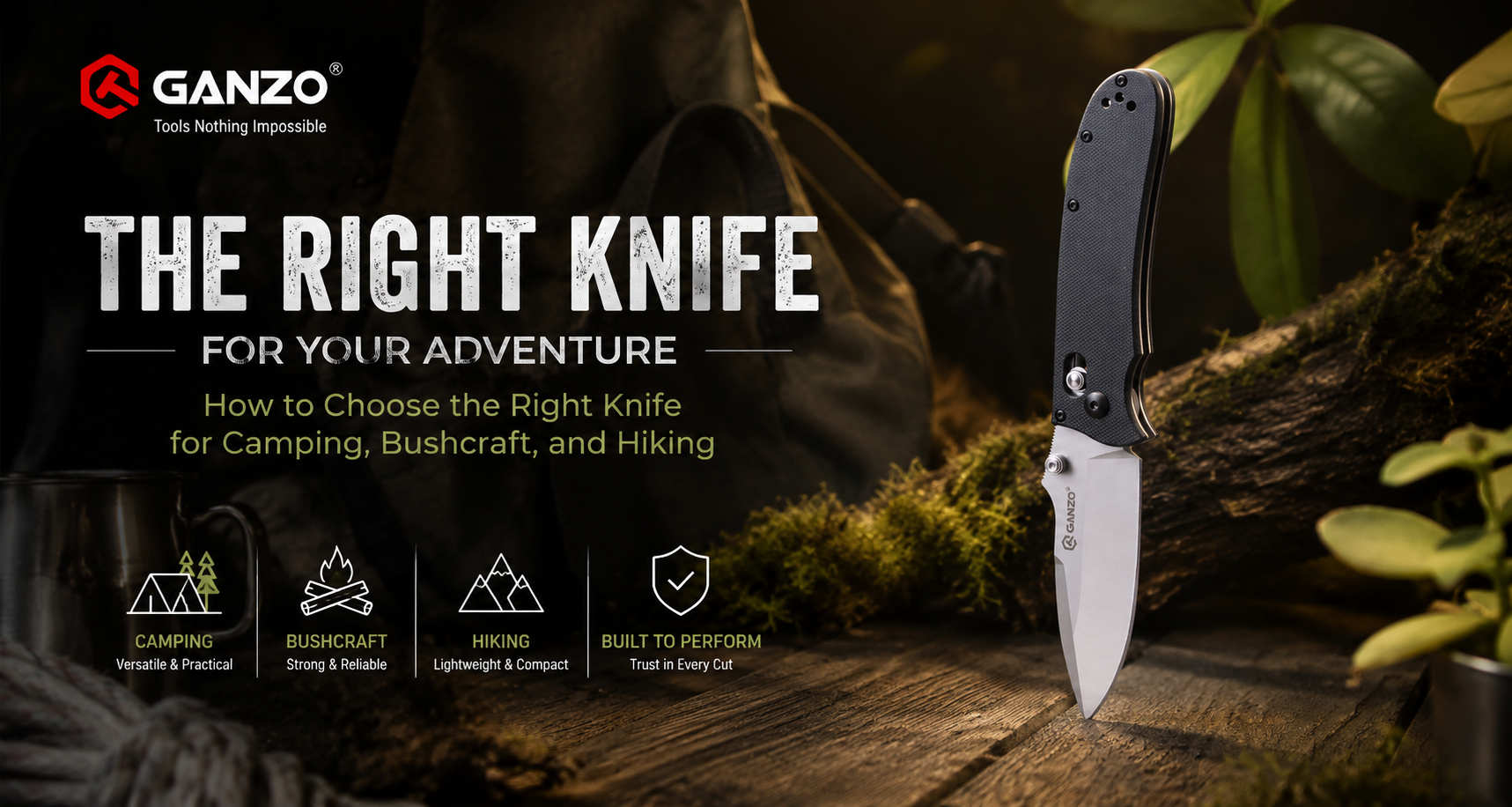
A good knife is one of the most valuable tools you can carry outdoors. Whether you're setting up camp, preparing food, carving wood, or tackling unexpected challenges on the trail, the right knife makes every task easier and safer.
However, not all outdoor knives are designed for the same purpose. A lightweight hiking knife may not be ideal for bushcraft, while a heavy-duty survival knife can feel excessive during a casual camping trip.
So, how do you choose the right knife for your adventures? Let's break down the key differences and the features that matter most.
First, Understand Your Activity
Before looking at blade steel or handle materials, think about how you'll actually use your knife.
Camping
Camping usually involves everyday outdoor tasks such as:
- Preparing meals
- Cutting rope
- Opening food packages
- Making kindling
- Setting up a tent
- Basic campsite maintenance
For these jobs, a medium-sized folding knife is often the perfect balance between portability and versatility.
Bushcraft
Bushcraft focuses on living and working in nature using natural resources.
Typical bushcraft tasks include:
- Carving wood
- Feather sticking
- Making traps
- Crafting tools
- Processing firewood
- Fire preparation
Bushcraft demands a stronger knife that can withstand prolonged use and heavier cutting tasks.
Hiking
When hiking, every gram matters.
Most hikers use a knife for:
- Food preparation
- Cutting cordage
- Emergency gear repairs
- First aid situations
- Occasional campsite tasks
A lightweight folding knife with a reliable locking mechanism is usually the best choice.
Folding Knife or Fixed Blade?
This is one of the most common questions among outdoor enthusiasts.
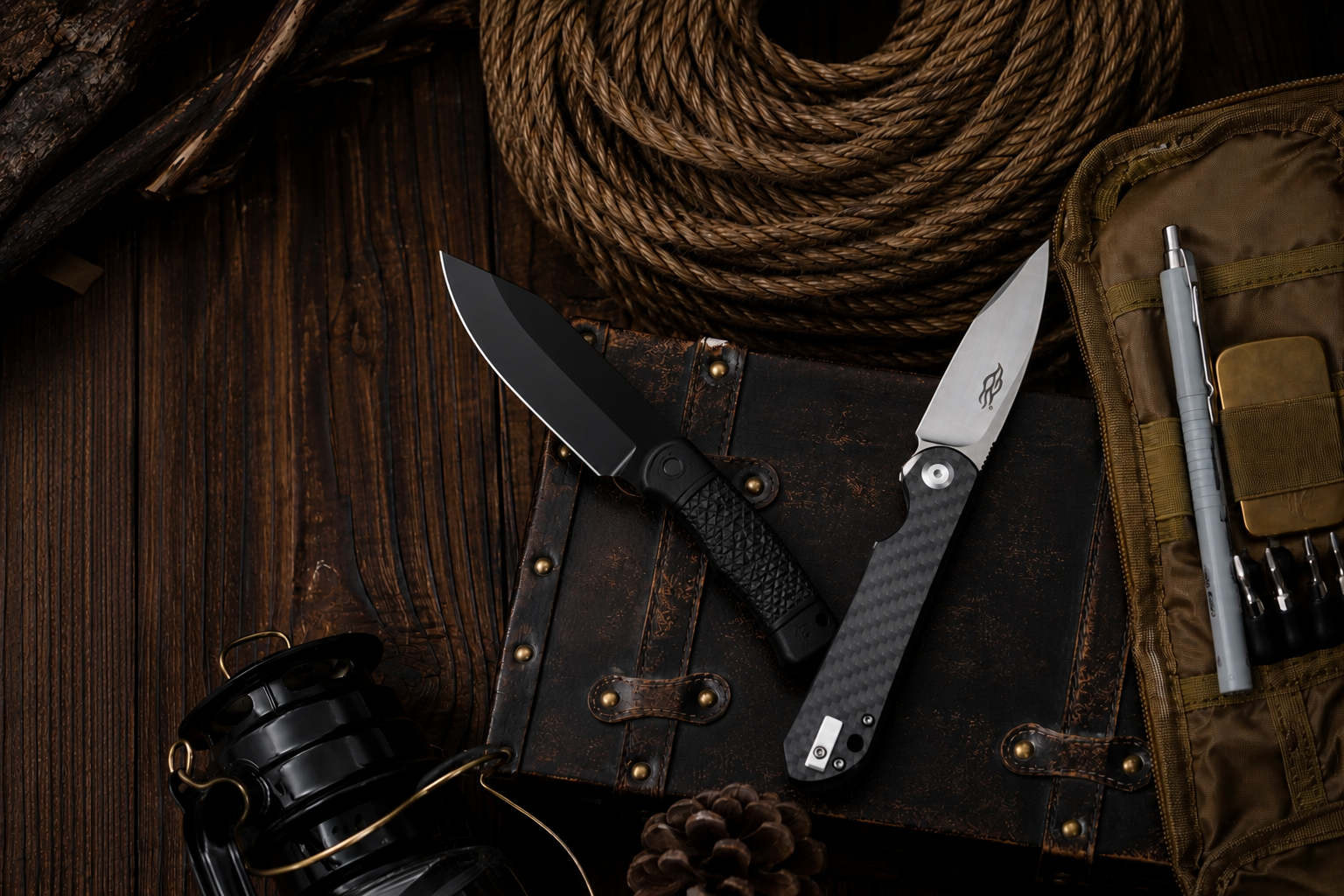
Folding Knives
Folding knives are compact, lightweight, and easy to carry in your pocket or backpack.
Advantages include:
- Lightweight design
- Compact size
- Safe transportation
- Convenient everyday carry
- Excellent for camping and hiking
Modern locking mechanisms make high-quality folding knives strong enough for most outdoor tasks.
Fixed Blade Knives
Fixed blade knives offer maximum strength because there are no moving parts.
They are better suited for:
- Heavy wood processing
- Batoning
- Intensive bushcraft work
- Survival situations
The trade-off is increased size and weight.
For many outdoor enthusiasts, a folding knife is sufficient for the majority of adventures.
Blade Length
Bigger isn't always better.
A blade between 80 and 100 mm (3–4 inches) provides excellent versatility for most outdoor activities.
This size is large enough for campsite tasks while remaining easy to control during detailed cutting work.
Very large blades may be useful for survival scenarios but are often unnecessary for everyday camping or hiking.
Choosing the Right Blade Steel
Blade steel determines how your knife performs over time.
Consider three important characteristics:
Edge Retention
A steel with good edge retention stays sharp longer, reducing the need for frequent sharpening during trips.
Corrosion Resistance
Outdoor environments often expose knives to moisture, dirt, and changing weather.
Stainless steels offer excellent resistance to rust and require less maintenance.
Toughness
If you expect your knife to handle tougher jobs like carving hardwood or light batoning, prioritize steels with good toughness that resist chipping.
Finding the right balance between hardness and toughness is often more important than chasing the highest hardness rating.
Blade Shape Matters
Different blade profiles excel at different tasks.
Drop Point
One of the most versatile blade shapes available.
Ideal for:
- Food preparation
- Wood carving
- General campsite work
- Everyday outdoor use
Clip Point
Offers a finer tip for precision cutting while maintaining excellent slicing performance.
Sheepsfoot
Provides maximum control during detailed cuts while reducing the risk of accidental punctures.
For most campers and hikers, a drop point blade remains the most practical option.
Locking Mechanism
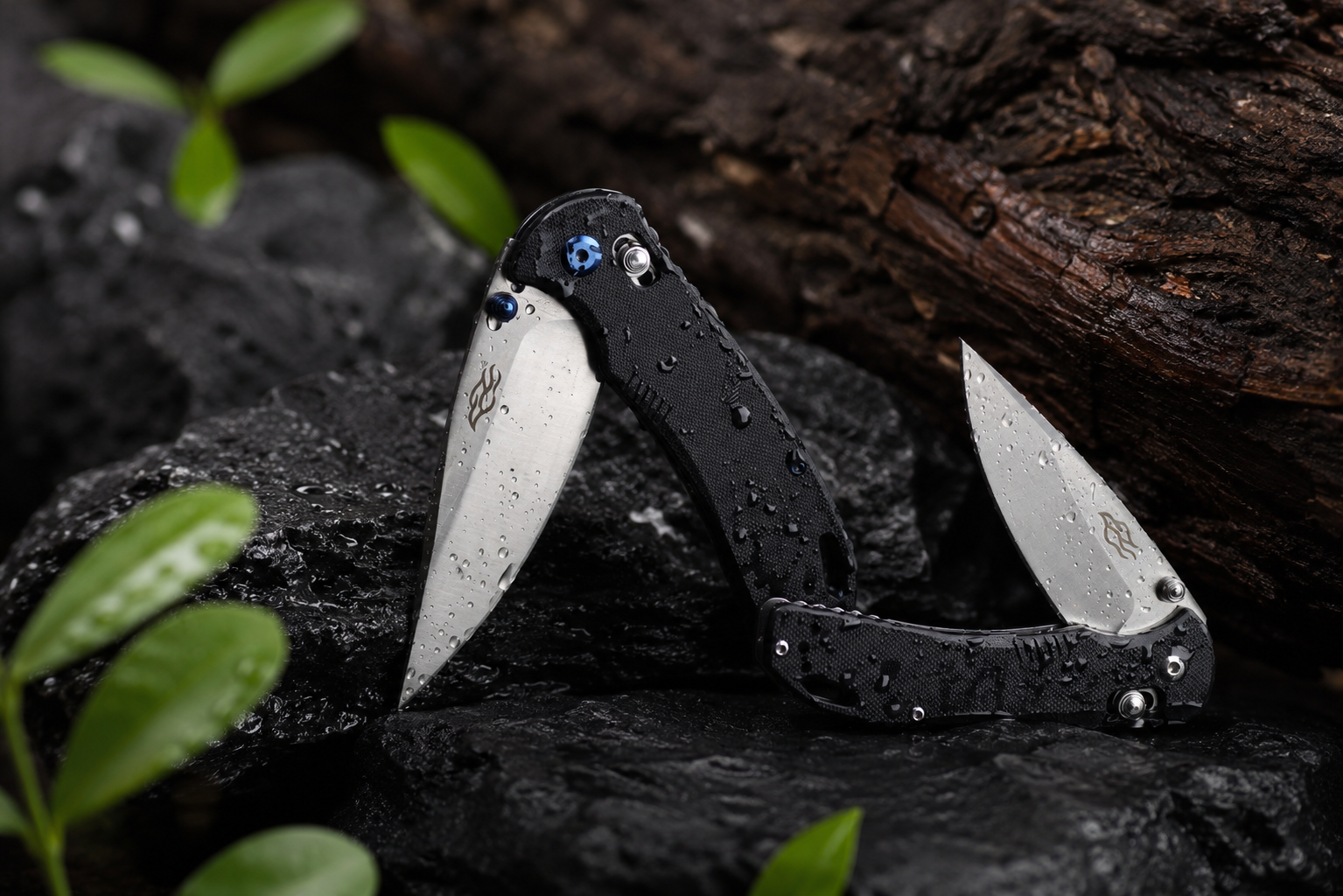
If you choose a folding knife, the locking system is critical.
A secure lock prevents accidental closure during use.
Reliable locking mechanisms include:
- Crossbar Lock
- Liner Lock
- Frame Lock
- Back Lock
The best system combines strength, reliability, and easy one-handed operation.
Comfortable Handle
A knife is only as good as its grip.
Look for handles that provide:
- Excellent traction
- Ergonomic shaping
- Comfortable long-term use
- Resistance to moisture and temperature changes
Materials like G10, fiberglass-reinforced nylon, and textured polymer offer excellent durability while maintaining a secure grip in wet conditions.
Weight Matters
For hiking, lightweight gear is always appreciated.
A knife weighing 60–120 grams is typically ideal for backpacking.
Bushcraft enthusiasts may accept a heavier knife in exchange for increased strength and durability.
Choose the lightest knife that still meets your expected workload.
Additional Features
Some folding knives include practical extras such as:
- Reversible pocket clips
- Lanyard holes
- Thumb studs or flippers for quick deployment
- Deep-carry pocket clips
- Glass breakers (on select models)
While these features aren't essential, they can improve convenience depending on your needs.
Knife Care in the Outdoors
A quality knife will last for years with proper maintenance.
Follow these simple habits:
- Clean the blade after each trip.
- Dry the knife thoroughly before storage.
- Apply a light coat of oil to protect the blade.
- Keep the pivot clean on folding knives.
- Sharpen the edge before it becomes excessively dull.
Regular maintenance ensures reliable performance whenever you head outdoors.
One Knife Doesn't Have to Do Everything
There is no universal "best" outdoor knife.
The ideal choice depends on your activities:
- Camping: A versatile folding knife with a durable stainless steel blade and comfortable handle.
- Bushcraft: A stronger knife capable of extended wood processing and demanding carving tasks.
- Hiking: A lightweight, compact folding knife that delivers maximum functionality with minimal weight.
Understanding how you'll use your knife is the first step toward making the right decision.
Choose a Knife You Can Trust
The best outdoor knife isn't necessarily the largest or the most expensive—it's the one that performs reliably every time you need it.
At Ganzo Knife, we design folding knives for real outdoor adventures. Built with dependable locking systems, durable blade steels, ergonomic handles, and practical designs, our knives are ready for camping weekends, bushcraft projects, mountain hikes, and everyday carry.
No matter where the trail leads, the right knife helps you stay prepared, work efficiently, and enjoy every moment in the outdoors.
