
Choosing your first survival knife can be challenging. There are hundreds of models with different blade shapes, steels, handle materials, sizes, and designs.
But a good survival knife doesn't have to be the biggest or most aggressive-looking model. For a beginner, the most important characteristics are reliability, versatility, comfortable handling, and suitability for the environment where you plan to use it.
In this guide, we'll explain what to look for in a survival knife and highlight several Ganzo Knife models worth considering for outdoor adventures.
What Is a Survival Knife?
A survival knife is a versatile outdoor tool designed for a wide range of practical tasks.
Depending on the situation, it can be useful for:
- Cutting cord and rope
- Preparing food
- Processing small branches
- Preparing kindling
- Carving wood
- General campsite tasks
- Emergency gear repairs
A knife shouldn't be expected to replace every tool. An axe or saw is usually more appropriate for heavy wood processing, while specialized tools are better for other demanding jobs.
The goal of a survival knife is to provide one reliable cutting tool for a variety of outdoor tasks.
1. Think About Where You Will Use It
Start by considering your typical activities.
Will you use the knife for hiking, camping, bushcraft, fishing, or longer outdoor trips?
A lightweight knife may be ideal for hiking, while a more robust fixed blade can be preferable for demanding outdoor tasks.
Choose the knife according to your environment and actual needs—not simply its appearance.
2. Fixed Blade or Folding Knife?
This is one of the most important choices.
Fixed Blade
Fixed-blade knives have no folding mechanism and are generally well suited to demanding outdoor work. They are also straightforward to clean and maintain.
Folding Knife
Folding knives are more compact and convenient to carry. They are excellent for hiking, camping, and general outdoor tasks where portability matters.
For a beginner, a simple rule works well:
Choose a fixed blade when robustness is your priority; choose a folding knife when compactness and portability matter more.
3. Choose a Practical Blade Size and Shape
Bigger isn't always better.
A medium-sized blade is often a good compromise between cutting performance, control, and portability.
Consider:
- Blade length
- Blade thickness
- Overall weight
- Handle size
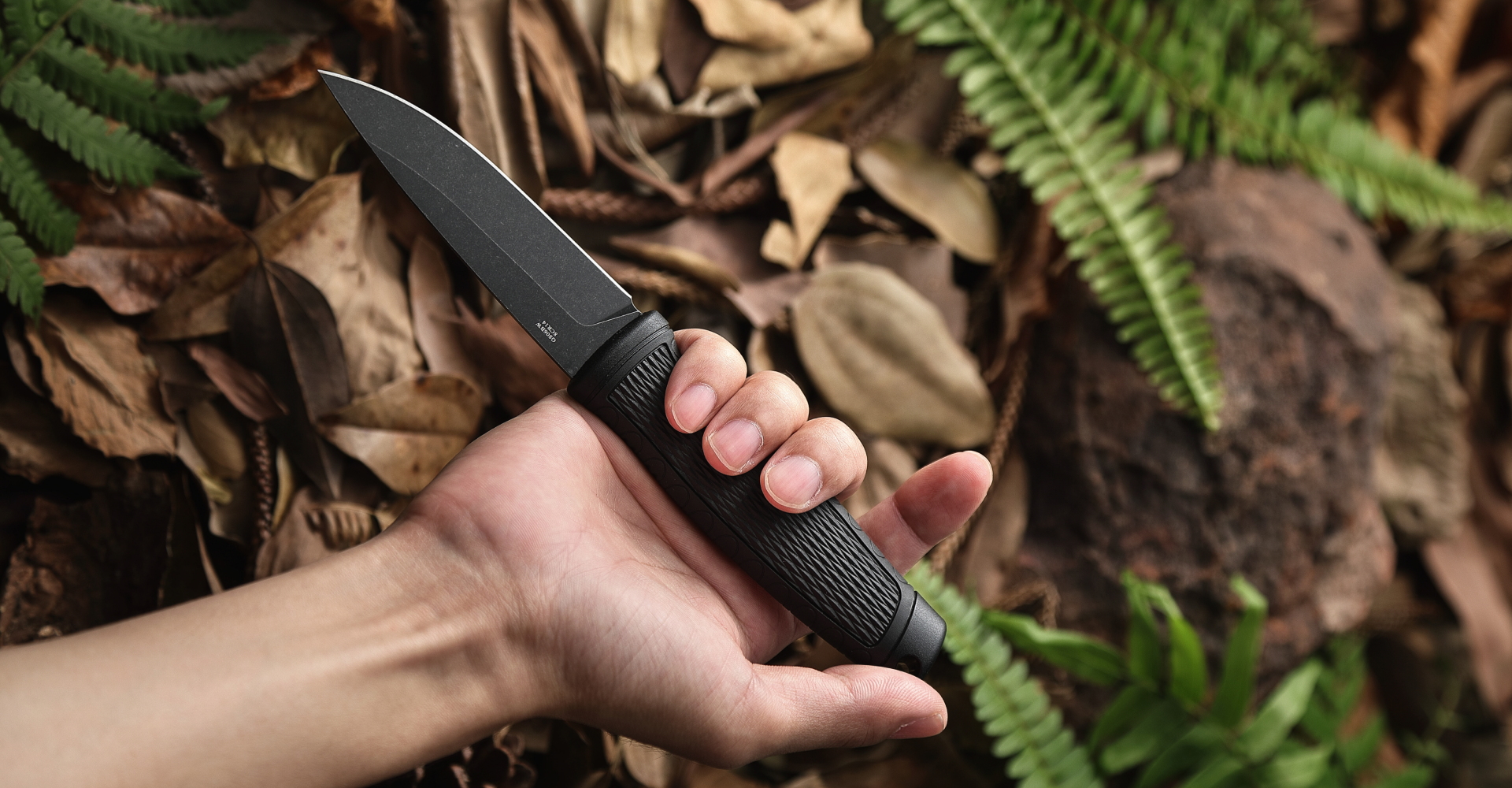
For outdoor use, the Drop Point is one of the most versatile blade shapes. Its balanced profile works well for general cutting, food preparation, wood carving, and campsite tasks.
4. Consider Blade Steel
Blade steel affects edge retention, toughness, corrosion resistance, and ease of sharpening.
Ganzo uses several steels across its outdoor and folding knife ranges, including 8Cr14, 8Cr13MoV, 9Cr14MoV, and 440C. The best choice depends on the balance you need between cutting performance and maintenance.
For outdoor use, don't focus only on the steel name. Also consider heat treatment, blade geometry, and how easily you can maintain the edge.
A steel that is easy to sharpen and maintain can be an excellent choice for a beginner.
5. Don't Ignore the Handle
A survival knife needs to feel comfortable and secure in your hand.
Consider:
- Grip
- Texture
- Handle shape
- Thickness
- Material
- Overall ergonomics
Outdoor conditions can mean wet or dirty hands, so a secure grip is particularly important.
G10 and textured synthetic materials are popular choices because they can provide good grip while keeping the knife practical to carry.
6. Consider the Carrying System
If you choose a fixed-blade knife, pay attention to the sheath.
A good sheath should hold the knife securely, protect the blade, and be practical for outdoor carry.
For folding knives, check the pocket clip and make sure it holds the knife securely.
The carrying system is part of the knife's overall functionality and shouldn't be overlooked.
7. Don't Forget Maintenance
Outdoor knives can be exposed to water, dirt, mud, sweat, and salt.
After a trip, follow a simple routine:
Clean → Dry → Inspect → Lubricate if necessary
Keep the blade sharp and regularly check the handle, fasteners, sheath, or folding mechanism.
Even corrosion-resistant stainless steel requires basic maintenance.
Recommended Ganzo Knives for Survival and Outdoor Use
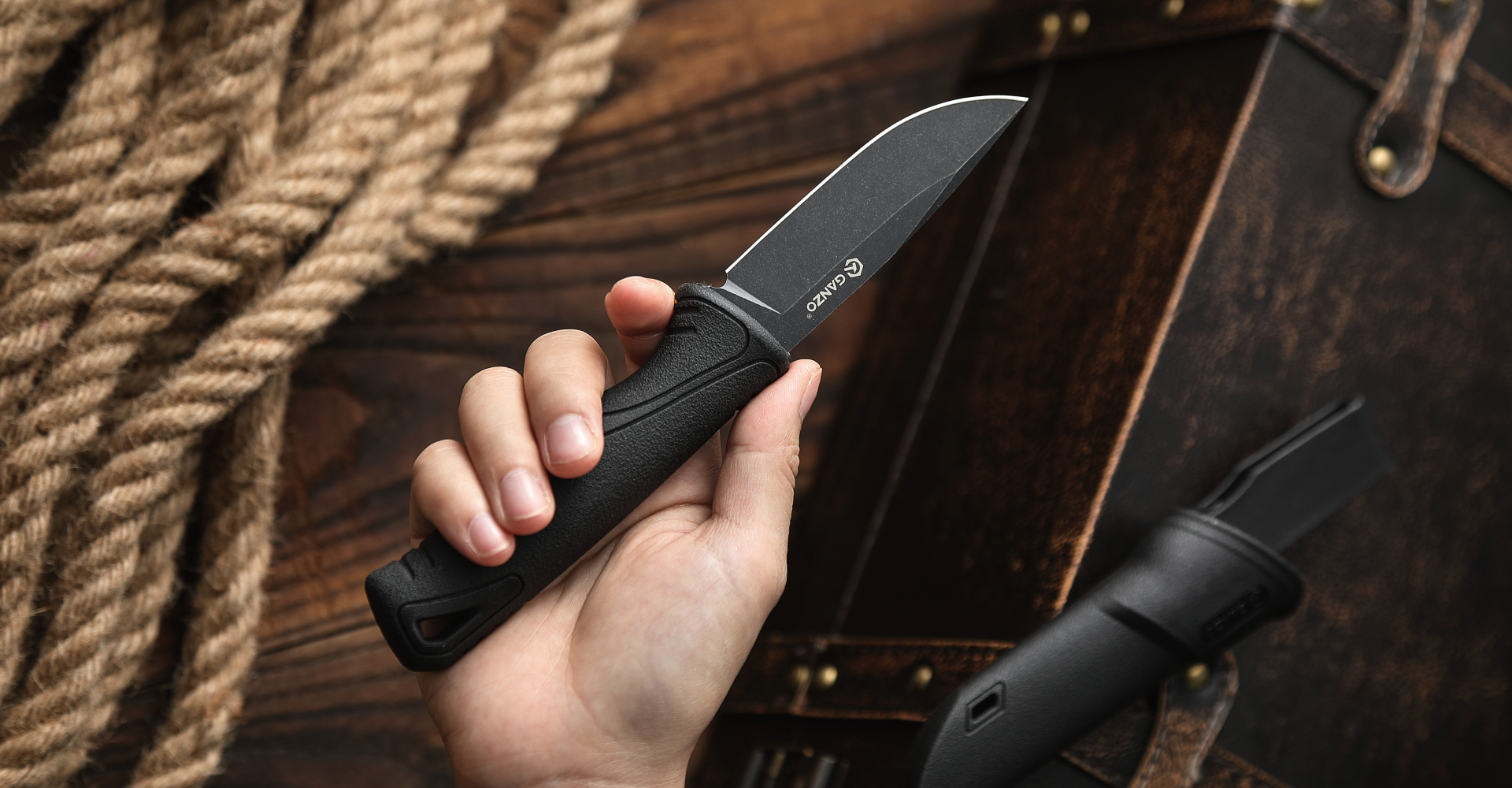
Ganzo offers several fixed-blade models designed for outdoor activities. The 8 Series includes fixed-blade knives in different formats, making it a useful place to start when looking for an outdoor or survival knife.
Ganzo G806 — Lightweight Outdoor Knife
The Ganzo G806 is a practical fixed-blade option for hiking, camping, and general outdoor use.
It features an 8Cr14 stainless steel blade and a PP+TPR handle designed to provide a comfortable and secure grip. The knife has a 98 mm blade, while its overall length is 217 mm. A sheath is included for convenient carry.
Choose the G806 if you want:
- A lightweight fixed blade
- A practical outdoor knife
- A comfortable grip
- A convenient carry setup
- A model for hiking and camping
Ganzo G807WB — Robust Outdoor Option
The Ganzo G807WB is a more substantial fixed-blade option for users who prefer a robust outdoor knife.
Its construction is aimed at users who need a dependable tool for camping, hiking, bushcraft, and other outdoor activities.
Choose the G807WB if you want:
- A robust fixed blade
- A substantial outdoor design
- A knife for camping and bushcraft
- A dependable tool for outdoor activities
Ganzo G808 — Practical Outdoor Knife
The Ganzo G808 is another option to consider for an outdoor kit. Its fixed-blade construction makes it suitable for users who prefer a straightforward and practical knife for hiking, camping, and general outdoor tasks.
Choose the G808 if you want:
- A practical fixed-blade knife
- A robust outdoor design
- A comfortable grip
- A versatile tool for camping and hiking
- A knife suitable for regular outdoor use
Which Ganzo Knife Should You Choose?
Choose the G806 if low weight and portability are your priorities.
Choose the G807WB if you want a more substantial fixed blade for demanding outdoor activities.
Choose the G808 if you want a practical and versatile fixed-blade knife for hiking, camping, and general outdoor use.
If you prefer a folding knife because portability is more important to you, Ganzo also offers a wide range of folding models suitable for EDC, hiking, and lighter outdoor tasks.
Beginner's Survival Knife Checklist
Before buying, ask yourself:
☑ Where will I use the knife?
☑ Do I need a fixed blade or a folding knife?
☑ Is the blade size appropriate for my tasks?
☑ Is the blade shape versatile enough?
☑ Is the steel suitable for my environment and maintenance habits?
☑ Is the handle comfortable and secure?
☑ Is the knife easy to carry?
☑ Can I maintain and sharpen it myself?
☑ Is it legal to carry where I plan to use it?
If you can answer "yes" to most of these questions, you're on the right track.
Final Thoughts
Choosing a survival knife doesn't mean finding the largest or most expensive model.
A good beginner's survival knife should be reliable, versatile, comfortable, easy to maintain, and appropriate for your environment.
Think about your actual needs first, then choose the blade type, size, steel, handle, and carrying system accordingly.
At Ganzo Knife, we offer different options for hiking, camping, bushcraft, and outdoor use—from lightweight fixed blades such as the G806 to more substantial outdoor models such as the G807WB and G808.
Choose the right tool for the task, learn to use it responsibly, and keep it properly
