
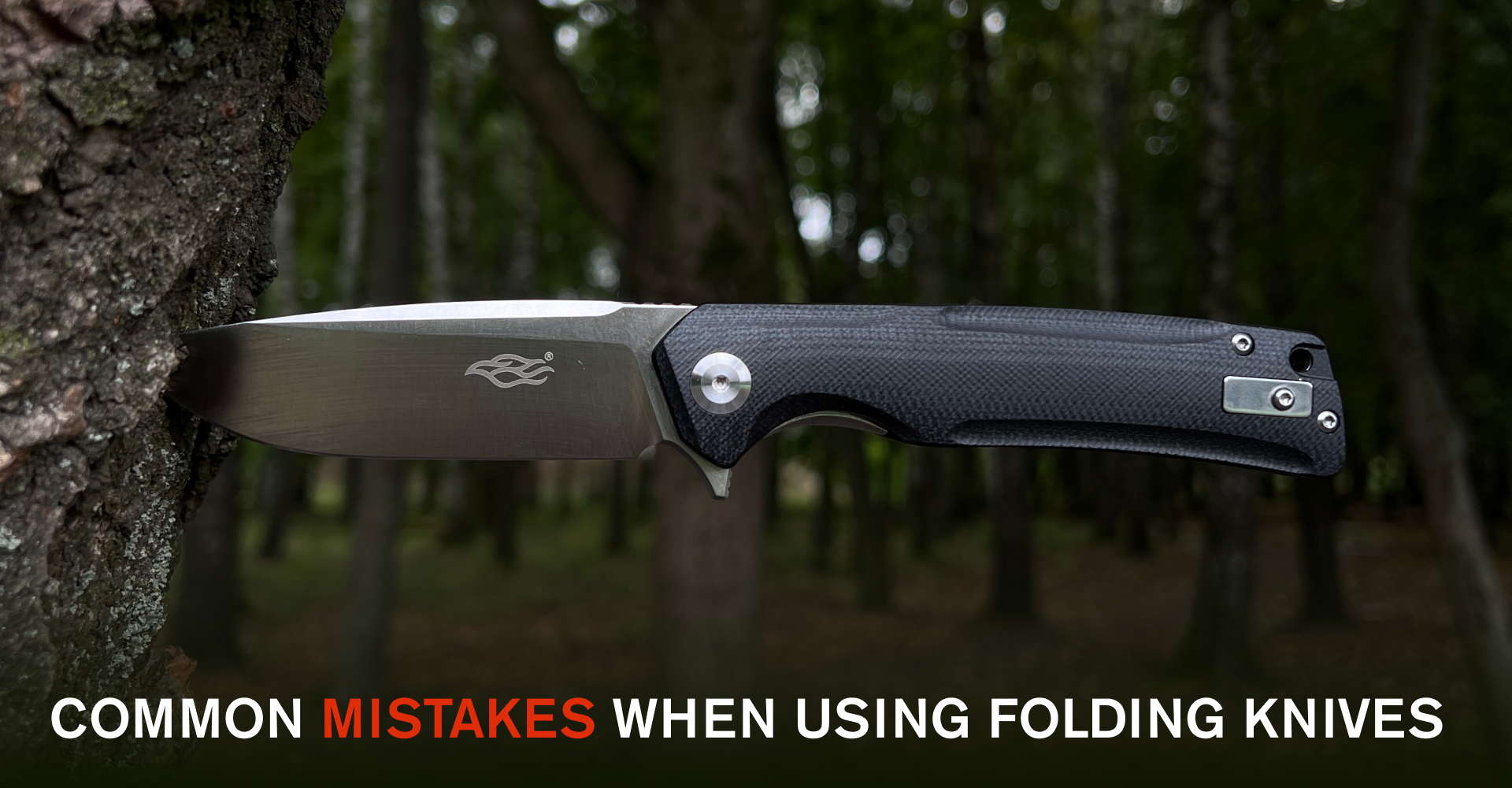
A folding knife is one of the most useful everyday tools for outdoor activities, travel, work, and daily tasks. It is compact, reliable, and designed for convenience. However, even a high-quality folding knife can quickly lose performance or become unsafe if used incorrectly.
Below are the most common mistakes users make when handling folding knives — and how to avoid them.
1. Using the knife as a multi-purpose prying tool
One of the most frequent mistakes is using a folding knife for tasks it was never designed for, such as:
- prying open lids or crates
- twisting screws
- hammering or levering heavy objects
Folding knives are engineered for cutting, not for mechanical force in multiple directions. Excess pressure can damage the blade tip, bend the steel, or destroy the locking mechanism.
Better approach: Always use the knife for cutting tasks only. For prying or heavy-duty work, choose a dedicated tool.
2. Not fully engaging the locking mechanism
A folding knife relies on a lock to keep the blade stable during use. Beginners sometimes fail to fully open or properly lock the blade before applying force.
This can lead to dangerous blade closure during cutting.
Better approach: Always check that the blade is fully opened and securely locked before use. Make it a habit to test stability with a light push before starting work.
3. Ignoring cleaning and maintenance
Dirt, dust, pocket lint, and moisture gradually accumulate inside the pivot and locking system. This leads to:
- stiff or slow opening
- reduced smoothness
- corrosion over time
- weakened lock performance
Better approach: Clean your knife regularly, especially after outdoor use. A few drops of lubricant on the pivot will keep the mechanism smooth and reliable.
4. Incorrect sharpening techniques
Sharpening mistakes are very common, especially among beginners. Problems include:
- inconsistent sharpening angle
- excessive removal of metal
- overheating the blade during sharpening
These issues can permanently affect cutting performance.
Better approach: Maintain a consistent angle and use proper sharpening tools such as whetstones, guided systems, or quality sharpeners suitable for your blade steel.
5. Carrying the knife incorrectly
Improper carry can cause safety risks or damage to the knife. Common mistakes include:
- carrying it loose in a bag or pocket
- not using a pocket clip (if available)
- storing it open or partially open
Better approach: Always carry the knife fully closed and secured, preferably using a pocket clip or protective pouch.
6. Forcing a stuck blade
If a folding knife becomes hard to open or close, forcing it is one of the worst things you can do. This usually worsens the problem and may damage internal components.
The issue is often caused by dirt, lack of lubrication, or misalignment.
Better approach: Stop using force. Instead, clean the pivot area, apply lubricant, and gently test movement.
7. Neglecting regular inspection
Many users assume a folding knife does not require maintenance until something breaks. Over time, screws can loosen and the pivot can shift, affecting safety and performance.
Better approach: Regularly check:
- screw tightness
- blade centering
- lock stability
- smoothness of opening and closing
Conclusion
A folding knife is a dependable tool, but only when used correctly and maintained properly. Avoiding these common mistakes will significantly improve safety, durability, and overall performance.
At GanzoKnife, we design folding knives for real-world use — but proper handling and care ensure they will serve you reliably for years in any situation.
