
A folding knife is one of the most practical tools you can carry. Whether you use it for everyday tasks, camping, hiking, fishing, or outdoor adventures, a quality folding knife can serve you for years when used correctly. However, many users—especially beginners—make simple mistakes that reduce performance, damage the knife, or even create safety risks.
In this guide, we'll look at the most common mistakes people make when using folding knives and explain how to avoid them.
1. Using a Folding Knife as a Pry Bar
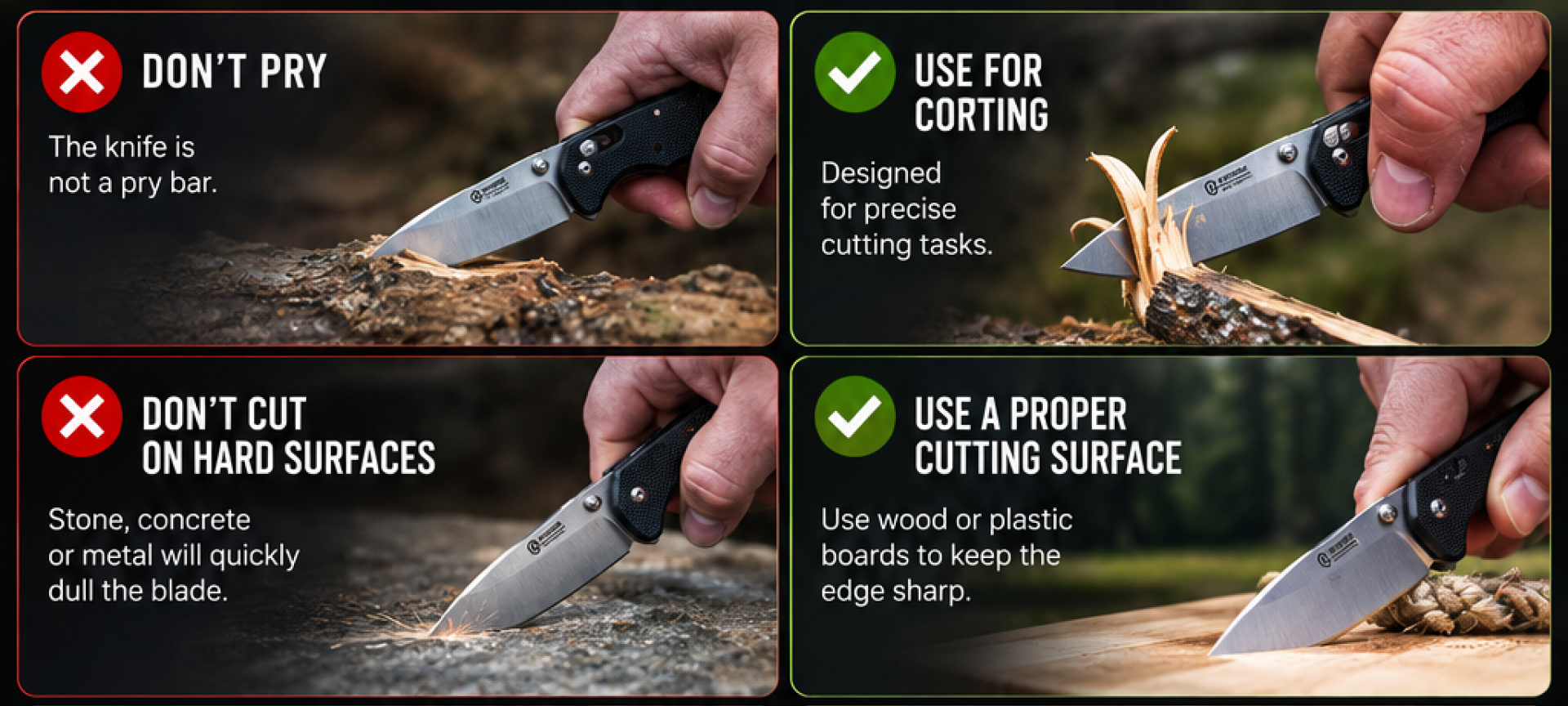
One of the biggest mistakes is trying to pry open lids, separate boards, or lift heavy objects with the blade.
A knife is designed for cutting—not levering. Side pressure can bend or snap the blade, damage the pivot, or even cause the lock to fail.
Instead:
- Use a pry tool or screwdriver.
- If you regularly need to pry objects, carry a multitool alongside your knife.
2. Cutting on Hard Surfaces
Many people cut directly on stone, glass, concrete, or metal.
These surfaces quickly dull the cutting edge and may even chip the blade.
Better option:
- Use a wooden or plastic cutting board whenever possible.
- In the outdoors, a flat piece of wood works perfectly.
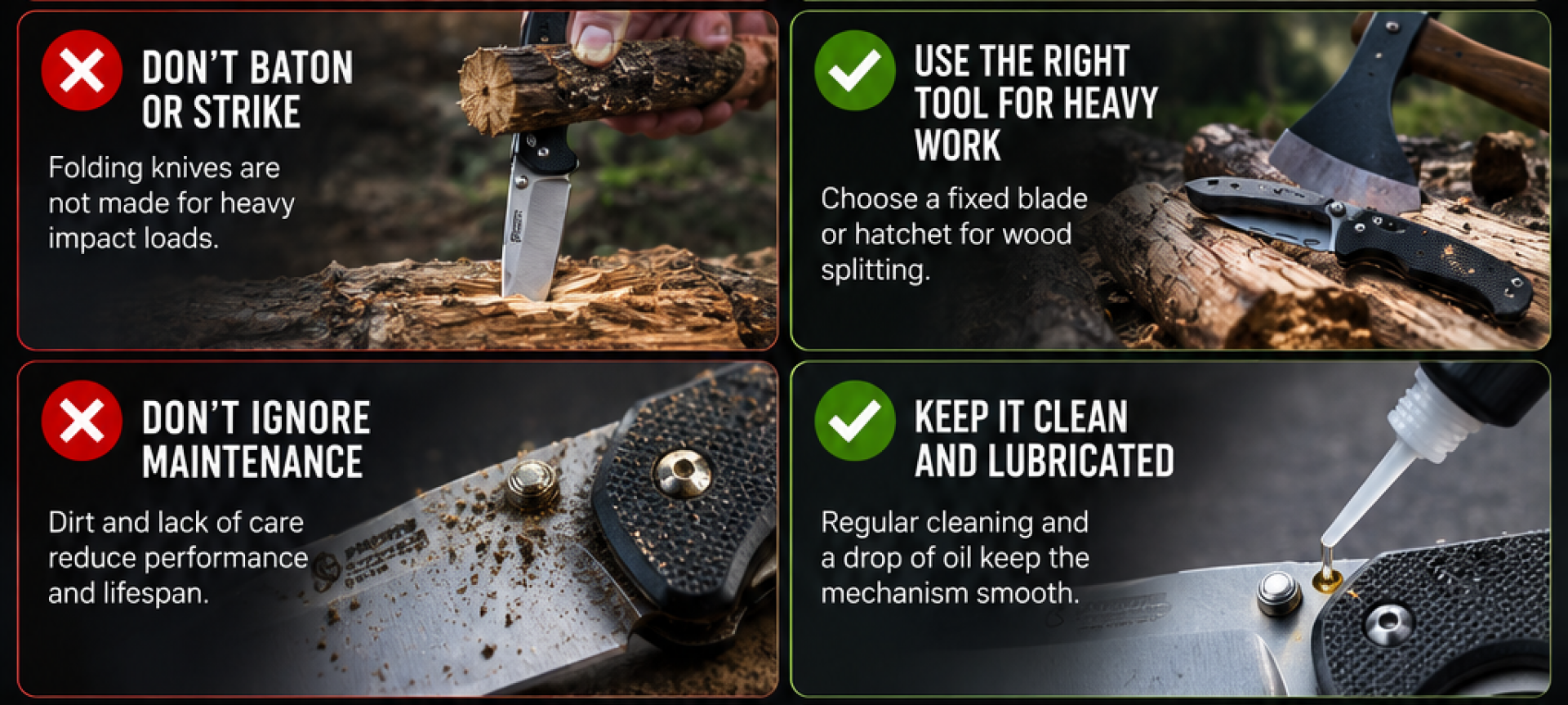
3. Ignoring Blade Maintenance
Even premium blade steel requires maintenance.
Many users continue using a dull knife for months instead of sharpening it.
Ironically, a dull knife is often more dangerous than a sharp one because it requires much more force to cut.
Regular maintenance should include:
- Cleaning the blade
- Drying it after use
- Applying a small amount of lubricant to the pivot
- Sharpening when necessary
4. Neglecting the Lock Mechanism
Dirt, sand, pocket lint, or wood dust often collect inside the pivot and locking mechanism.
If ignored, the knife may:
- open less smoothly,
- lock inconsistently,
- wear faster.
After outdoor trips or dirty work, simply rinse or clean the mechanism (according to the manufacturer's recommendations), dry it thoroughly, and apply a drop of lubricant.
5. Batoning with a Folding Knife
Some beginners see survival videos where people strike a knife with a baton to split wood.
This technique is intended for fixed-blade knives—not folding knives.
Heavy impact loads place enormous stress on:
- the pivot,
- locking mechanism,
- handle construction.
For firewood preparation, choose a fixed blade or a compact hatchet instead.
6. Using the Wrong Knife for the Job
Every folding knife has a purpose.
An ultralight EDC knife isn't designed for heavy bushcraft, while a large tactical folder may be excessive for opening packages in the office.
Before buying, think about your primary use:
- Everyday Carry
- Hiking
- Camping
- Bushcraft
- Fishing
- Hunting
- Work
Choosing the right tool improves both safety and performance.
7. Forgetting to Tighten Pivot Screws
After months of regular use, screws may loosen slightly.
This can cause:
- blade play,
- off-center blade alignment,
- rough opening.
Check the pivot and body screws occasionally and tighten them with the correct Torx driver if necessary.
8. Closing the Blade Carelessly
Many minor injuries happen after the cutting job is already finished.
Users often:
- rush,
- place fingers in the blade path,
- close the knife without paying attention.
Always keep your fingers clear of the edge while disengaging the lock and folding the blade.
A few extra seconds can prevent an unnecessary injury.
9. Storing a Wet Knife
After camping, fishing, or hiking, people sometimes toss a wet knife into a backpack and forget about it.
Moisture trapped inside the handle can eventually lead to:
- corrosion,
- dirty pivot bearings,
- reduced opening smoothness.
Always dry your knife thoroughly before storing it.
10. Skipping Basic Safety Rules
A knife is a cutting tool—not a toy.
Avoid habits such as:
- catching a falling knife,
- handing an open knife carelessly to another person,
- cutting toward your body,
- using excessive force.
Developing good habits makes every task easier and significantly safer.
Tips to Extend the Life of Your Folding Knife
A few simple habits can greatly increase the lifespan of your knife:
- Keep the blade clean.
- Sharpen it before it becomes completely dull.
- Lubricate the pivot occasionally.
- Use the knife only for cutting tasks.
- Choose the right knife for the intended application.
- Store it dry.
- Inspect screws and lock mechanisms regularly.
These steps require only a few minutes but help ensure smooth operation for years.
Why Quality Matters
Good knife design also plays an important role in reliability.
A well-made folding knife features:
- durable blade steel,
- a reliable locking mechanism,
- ergonomic handle scales,
- precision machining,
- smooth opening,
- corrosion-resistant materials.
These characteristics improve both performance and user confidence in everyday use and outdoor environments.
Final Thoughts
A folding knife is one of the most useful tools you can own—but only when used correctly. Most problems aren't caused by poor materials or manufacturing defects; they're the result of improper use or neglected maintenance.
By avoiding common mistakes, cleaning your knife regularly, and using it for the tasks it was designed to perform, you'll enjoy better performance, greater safety, and a much longer service life.
Whether you're opening packages around town, preparing food at camp, carving wood on a hiking trip, or handling everyday tasks, treating your folding knife with care ensures it's always ready when you need it.
