
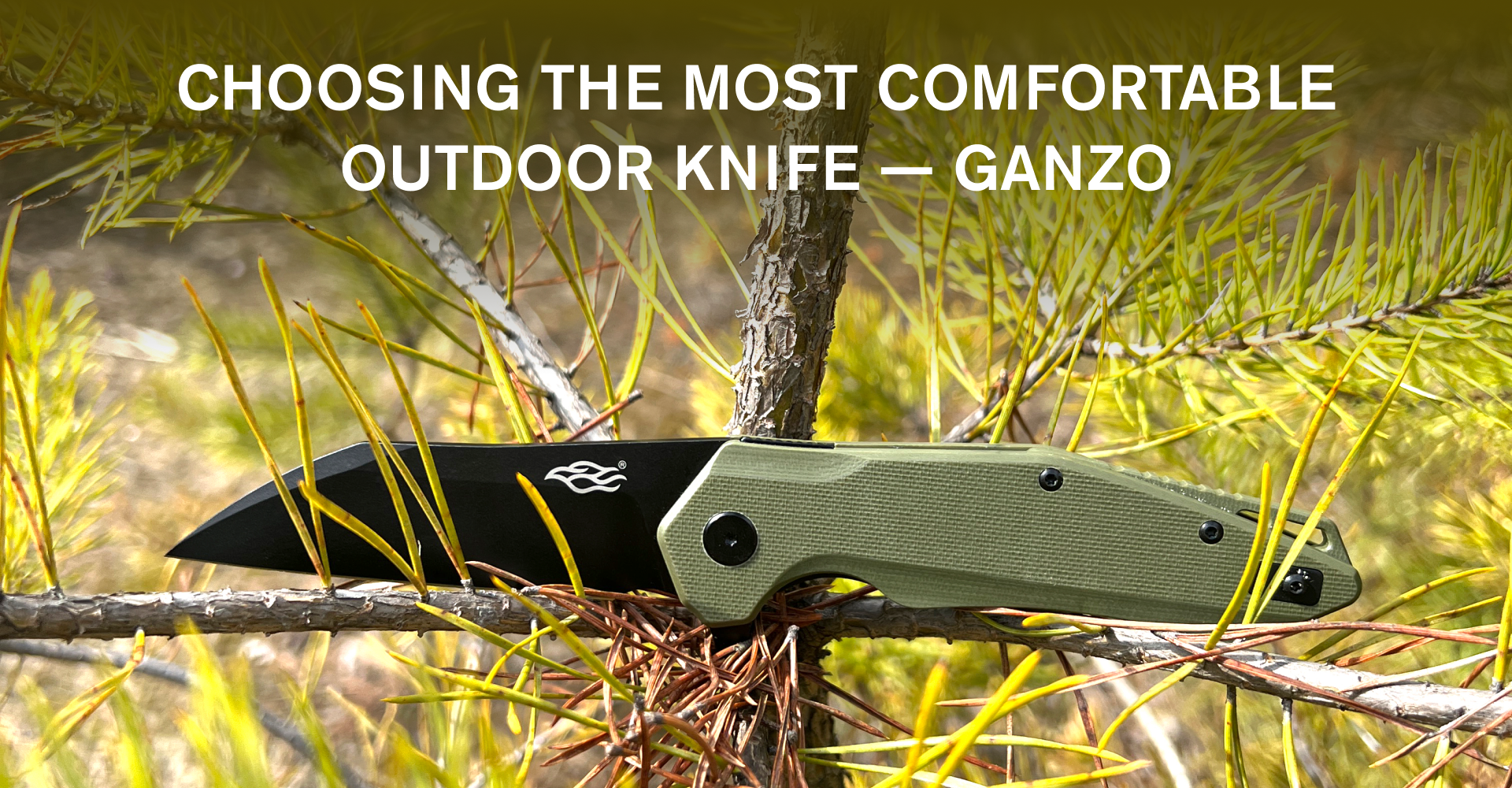
Let’s be honest: who hasn’t dreamed of finding that perfect knife capable of handling any task with ease? However, choosing a cutting tool for outdoor activities is almost a science. It requires understanding knife materials, construction features, and the specific tasks the tool will be used for.
Should you choose a folding or fixed blade knife? A full-metal construction or a handle with scales? When exploring different knives, it can be difficult to determine which one will suit you best. If you’re unsure where to start, this short guide will help answer the key question: How do you choose the right knife for outdoor use?
How to Choose the Most Comfortable Knife for Outdoor Activities
Outdoor gear can hardly be considered complete without a sharp knife. It plays an important role in many situations — from preparing a campsite and cooking meals to performing small repairs or even protecting yourself in emergency situations.
To understand which knife is best for outdoor use, first determine how you plan to use it:
- If you need a tool for cutting small branches, preparing food, or working with medium-density materials, a compact knife is the best option. It can easily handle basic tasks and conveniently fit in a pocket.
- For more demanding tasks that require physical strength, a knife with a thicker and more durable blade is the better choice.
Key Criteria for Choosing an Outdoor Knife
Comfort is a subjective factor that depends on individual preferences, so there is no universal knife that suits everyone equally well. To narrow down your options, evaluate knives according to several important criteria.
Type of Construction
Fixed Blade Knife
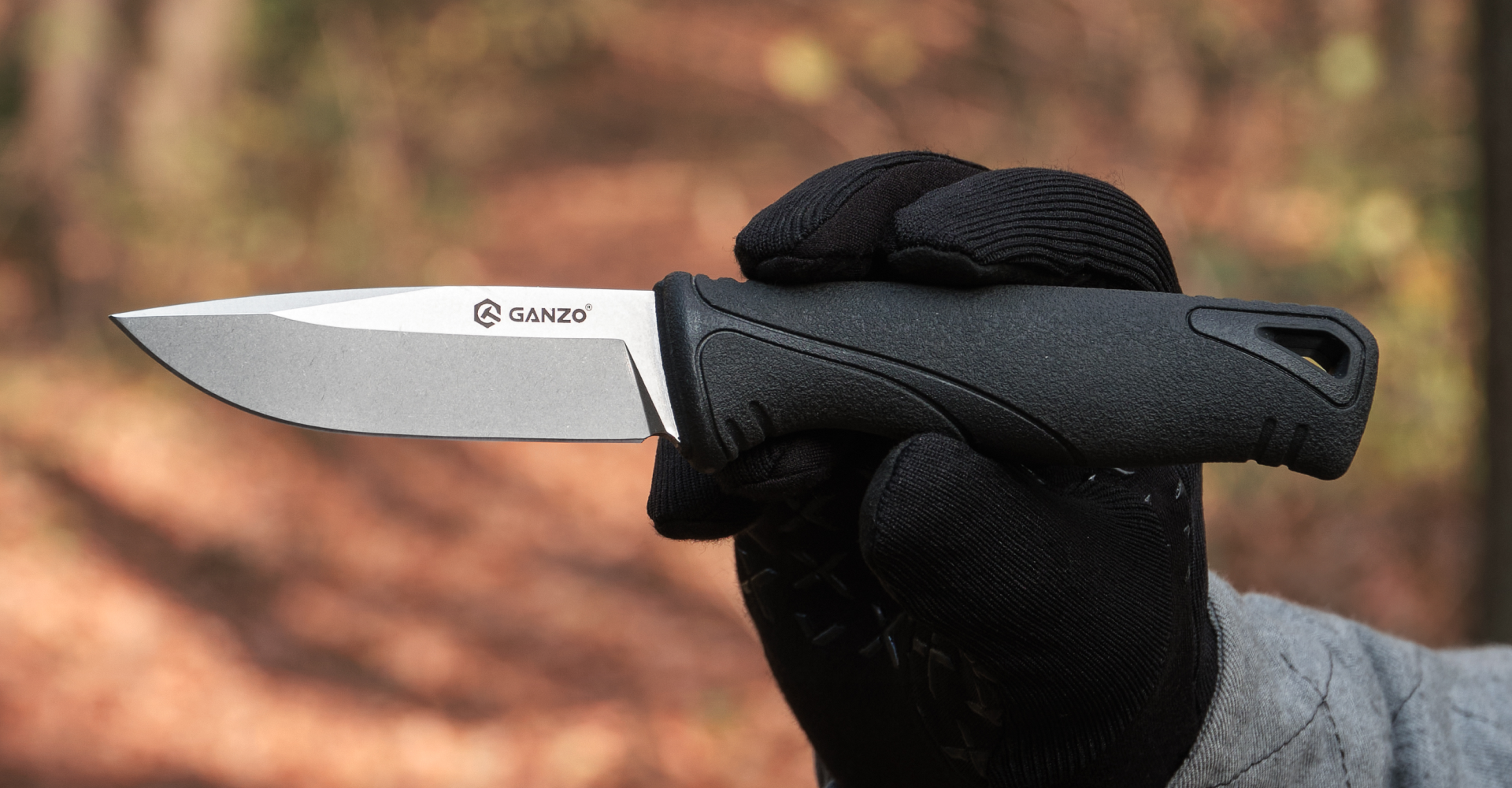
A fixed blade knife has a non-folding blade designed for demanding tasks. One important factor to consider is the tang type — the portion of the blade that extends into the handle.
There are several common tang types:
- Full tang – the blade runs through the entire handle, providing maximum strength and durability.
- Partial tang – the tang extends only partially into the handle.
- Hidden tang – the tang is fully enclosed within the handle and does not extend to the end.
Full tang knives are the most durable, while hidden tang designs are typically lighter.
Folding Knife
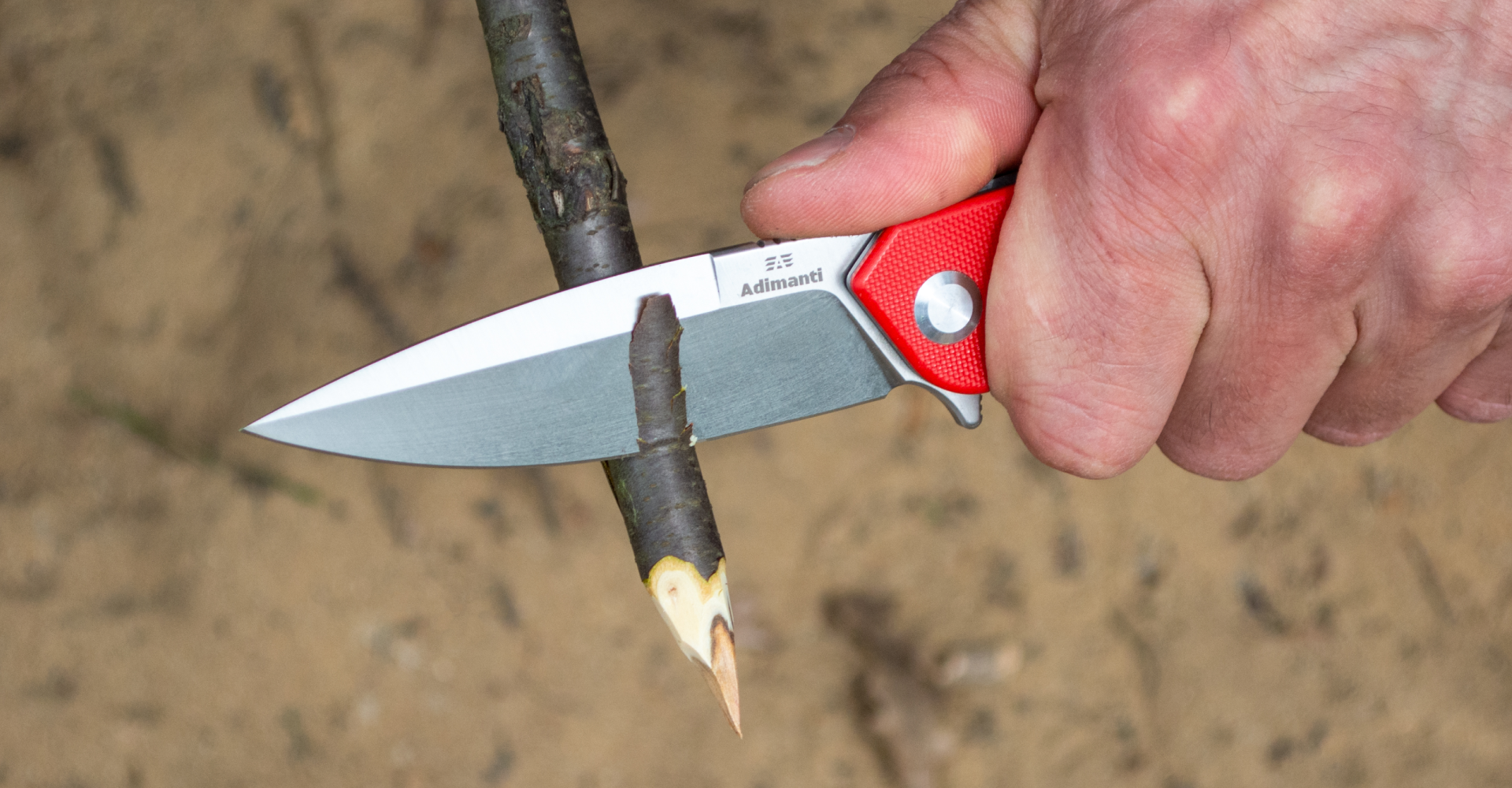
In folding knives, the blade folds into the handle, making the tool compact and easy to carry. These knives are ideal for everyday tasks and moderate workloads, since the locking mechanisms have a limited strength threshold.
However, folding knives offer excellent portability. Most models include a pocket clip, allowing the knife to be conveniently attached to clothing or gear.
Blade Material and Shape
Two main types of steel are commonly used in outdoor knives.
Stainless Steel
Stainless steel contains a high percentage of chromium, which makes it resistant to rust and corrosion. However, blades made from stainless steel usually require more frequent sharpening.
Carbon Steel
Carbon steel blades offer excellent hardness and cutting performance. They retain sharpness longer but require regular maintenance, as they are more prone to corrosion.
Blade Shape
When it comes to blade shape, some of the most versatile designs include:
- Drop Point
- Clip Point
- Wharncliffe
These blade types feature long cutting edges and perform well across a wide range of tasks.
Handle Ergonomics and Comfort
The handle material is another important factor when choosing an outdoor knife.
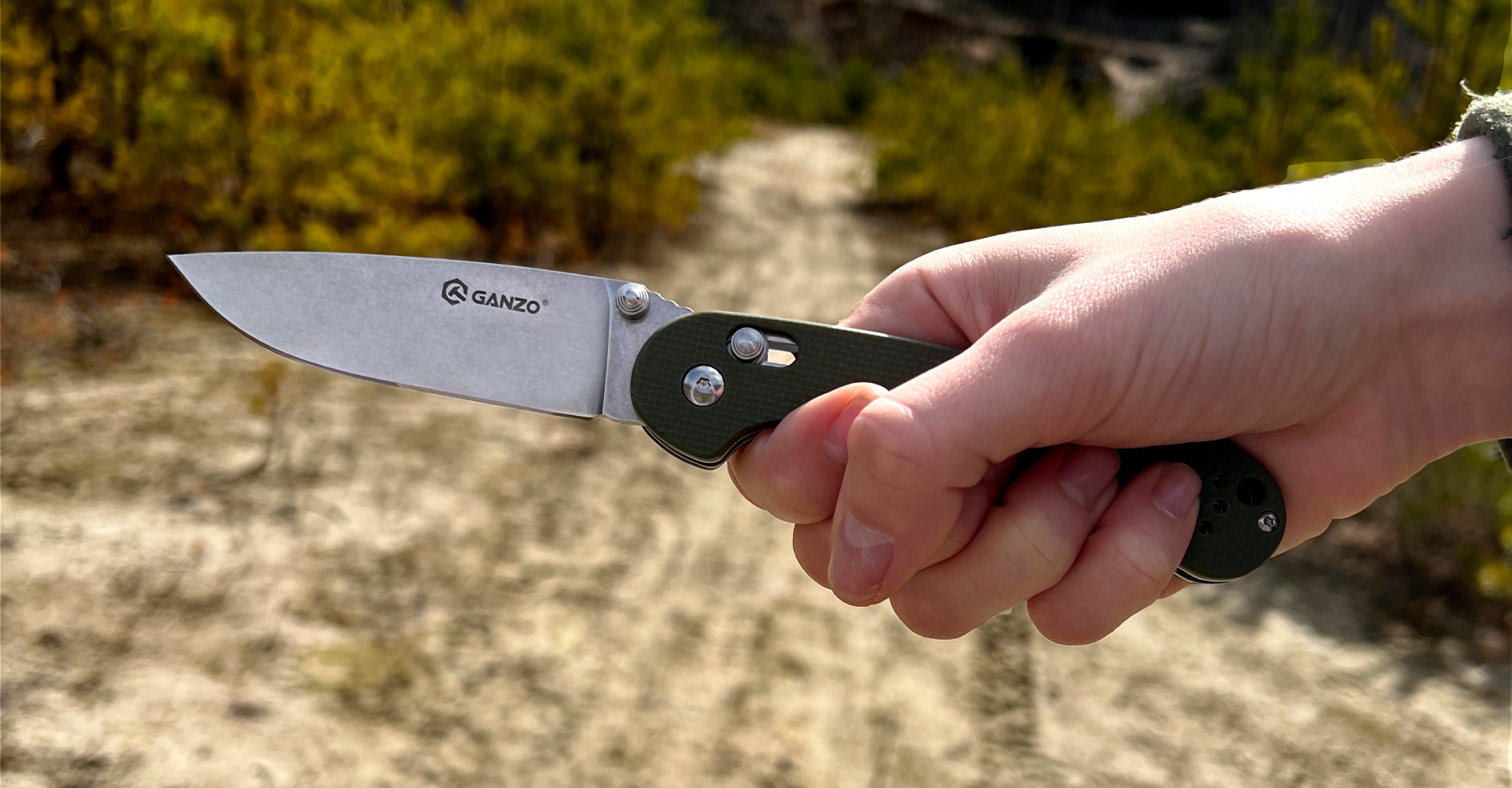
All-metal knives may look stylish and memorable, but they are often better suited for urban carry, as smooth metal handles can become slippery during heavy outdoor use.
For outdoor activities, it is better to choose knives with non-slip handle scales made from materials such as:
- fiberglass composites
- Micarta
- rubber
These materials provide a comfortable and secure grip without causing hand fatigue.
Useful Additional Features
Some knives come with extra features such as glass breakers, fire starters, or other small tools. Whether you need these additions depends entirely on your personal preferences and intended use.
It is also important to consider carrying convenience:
- Fixed blade knives should come with a sheath for belt carry.
- Folding knives typically include a pocket clip for easy everyday carry.
Top Ganzo Knives for Outdoor Use
Here are a few Ganzo knives that offer an excellent balance between cutting performance and durability for outdoor use.
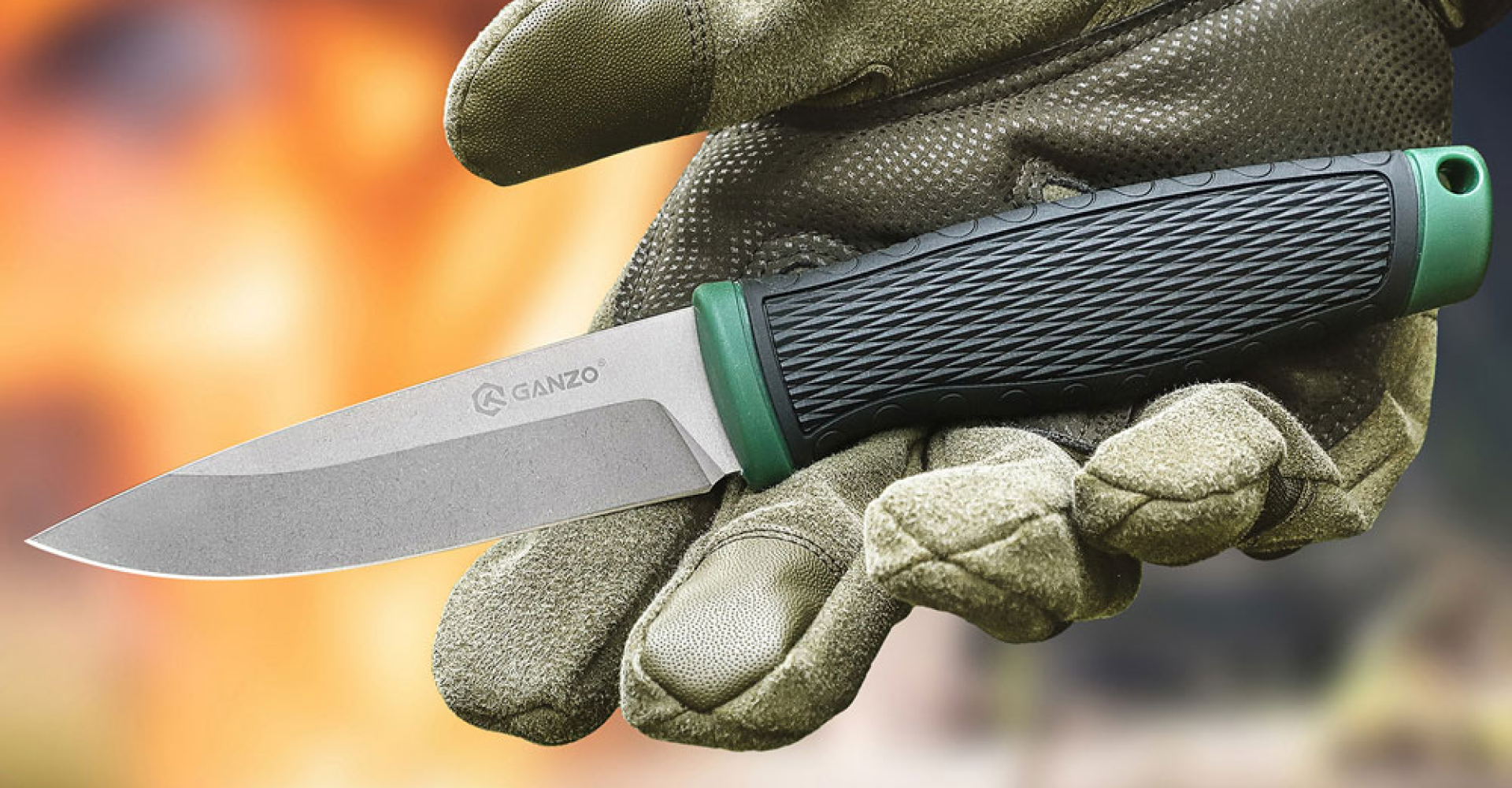
Fixed blade knives are among the most popular options for outdoor adventures, and the G806 is a great example of this category. The design focuses on practicality: a razor-sharp blade made from 8CR14 stainless steel combined with a polypropylene handle coated with thermoplastic rubber to minimize slipping.
Despite its 217 mm overall length, the knife weighs only 88.5 g, making this bright orange Ganzo knife extremely lightweight and comfortable to carry. It also comes with a sheath for safe transport.
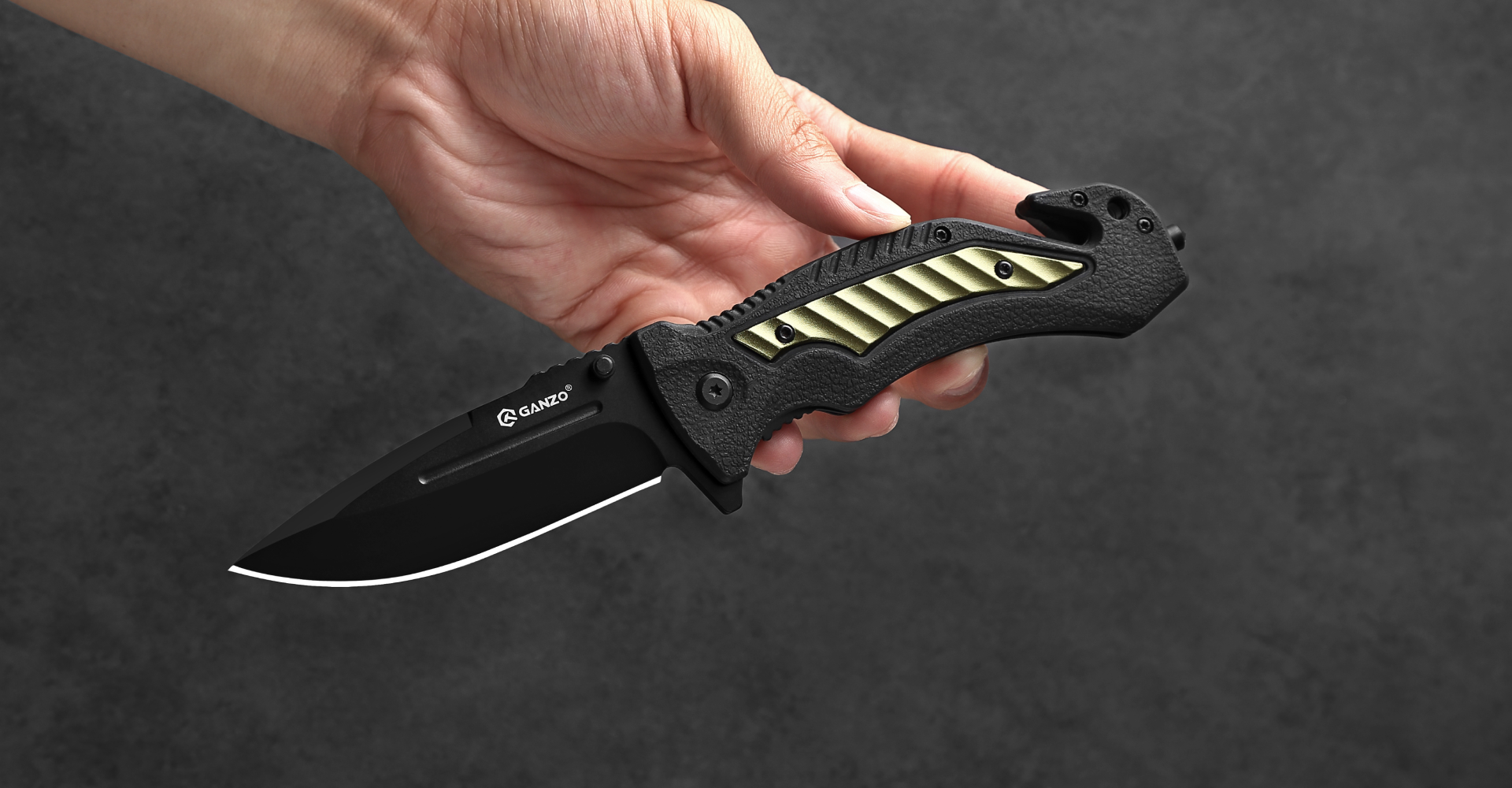
If you’re unsure how to choose a knife that works for almost any situation, the G628 is an excellent option.
This compact and budget-friendly folding knife measures only 121 mm when closed, making it suitable for both urban carry and outdoor use.
The blade is made from 440 steel and can be opened using either a thumb stud or a flipper. The handle is primarily made from polypropylene with aluminum inserts.
The knife also includes a glass breaker and strap cutter at the end of the handle, which can be useful in emergency situations.
Knife Care Tips
Now that you know how to choose a good outdoor knife, it is equally important to follow proper maintenance steps to extend the life of your tool:
- Clean the blade after each use, removing moisture and dirt to prevent corrosion.
- Lubricate the knife periodically to protect the metal and ensure smooth operation.
- Keep the locking mechanism of folding knives clean to maintain reliability.
- Sharpen the blade when the edge becomes dull. A dull knife not only reduces cutting performance but can also be less safe to use.
By following these recommendations, your knife will remain reliable and ready for any outdoor adventure.
